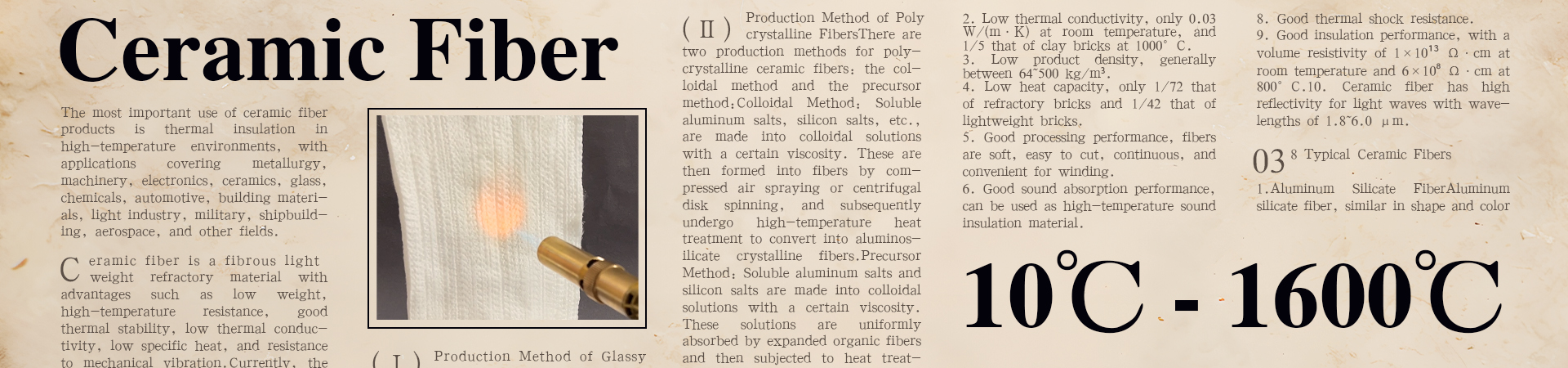
Alumina Silicate Fiber Modules
Ladle heating is a key step in steelmaking. The performance of the heating equipment significantly impacts converter tapping temperature, steelmaking operating rate, and furnace life. Ladle heating lies between steelmaking and casting, and its temperature plays a crucial role in coordinating the entire production process, especially in continuous casting. The main heat losses are threefold: heat loss from the molten steel surface, heat loss from the ladle shell, and heat loss from the ladle lining. The heat loss from the ladle lining accounts for approximately 40%–50% of the total heat loss.
Aladdin ceramic fiber modules are primarily used for the furnace cover of ladle heaters. The operating temperature of the ladle heater is 700-1000℃, while the operating temperature of the Aladdin ceramic fiber modules is between 800-1250℃. The thickness can be customized from 150-300mm according to user requirements. Ladle heaters with added fireproof linings heat the ladle faster and provide better temperature control.
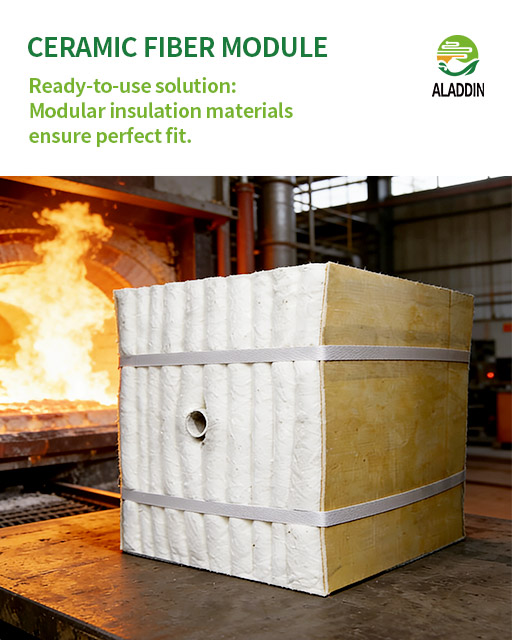
FAladdin Ceramic Fiber Modules for Ladle Baking Units
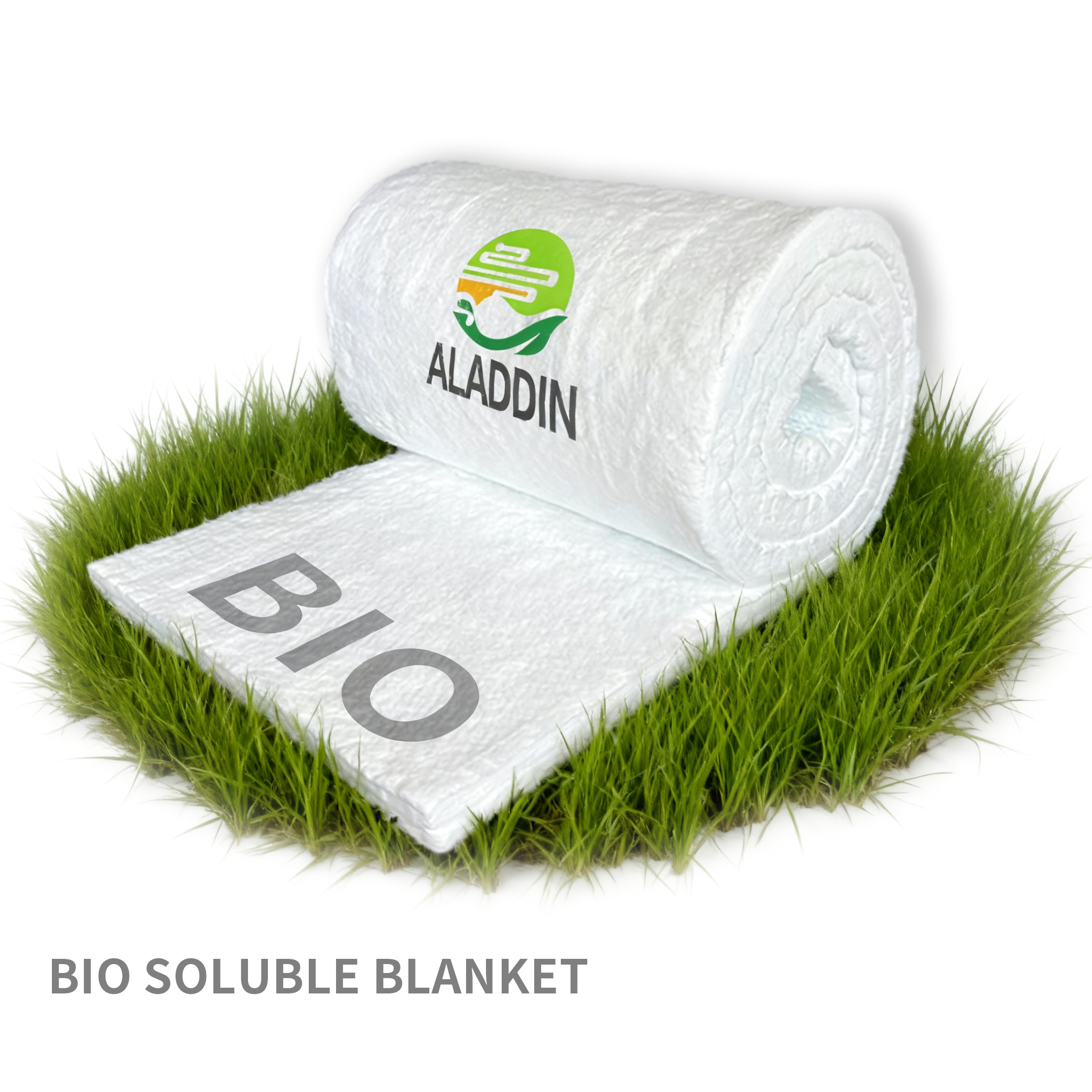
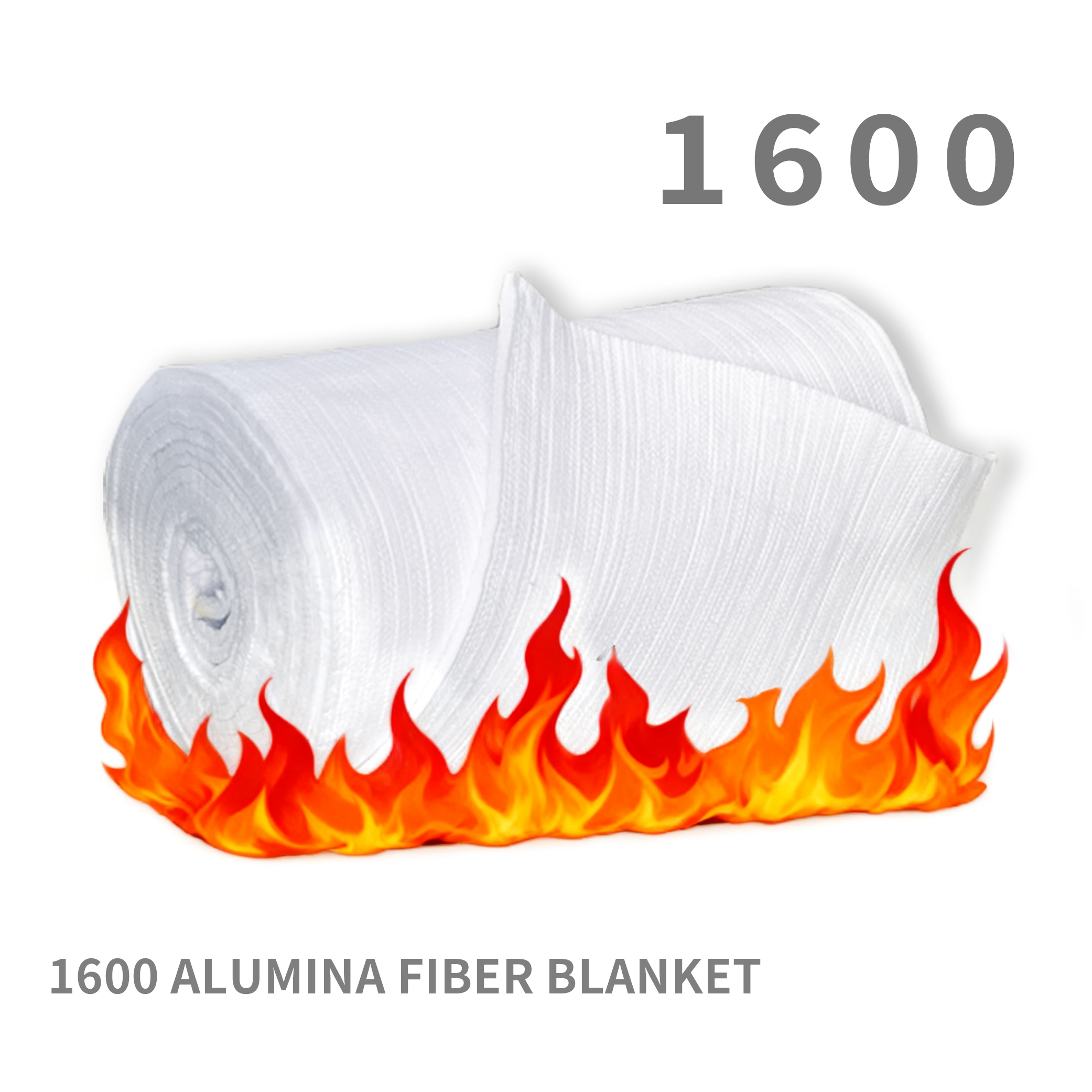
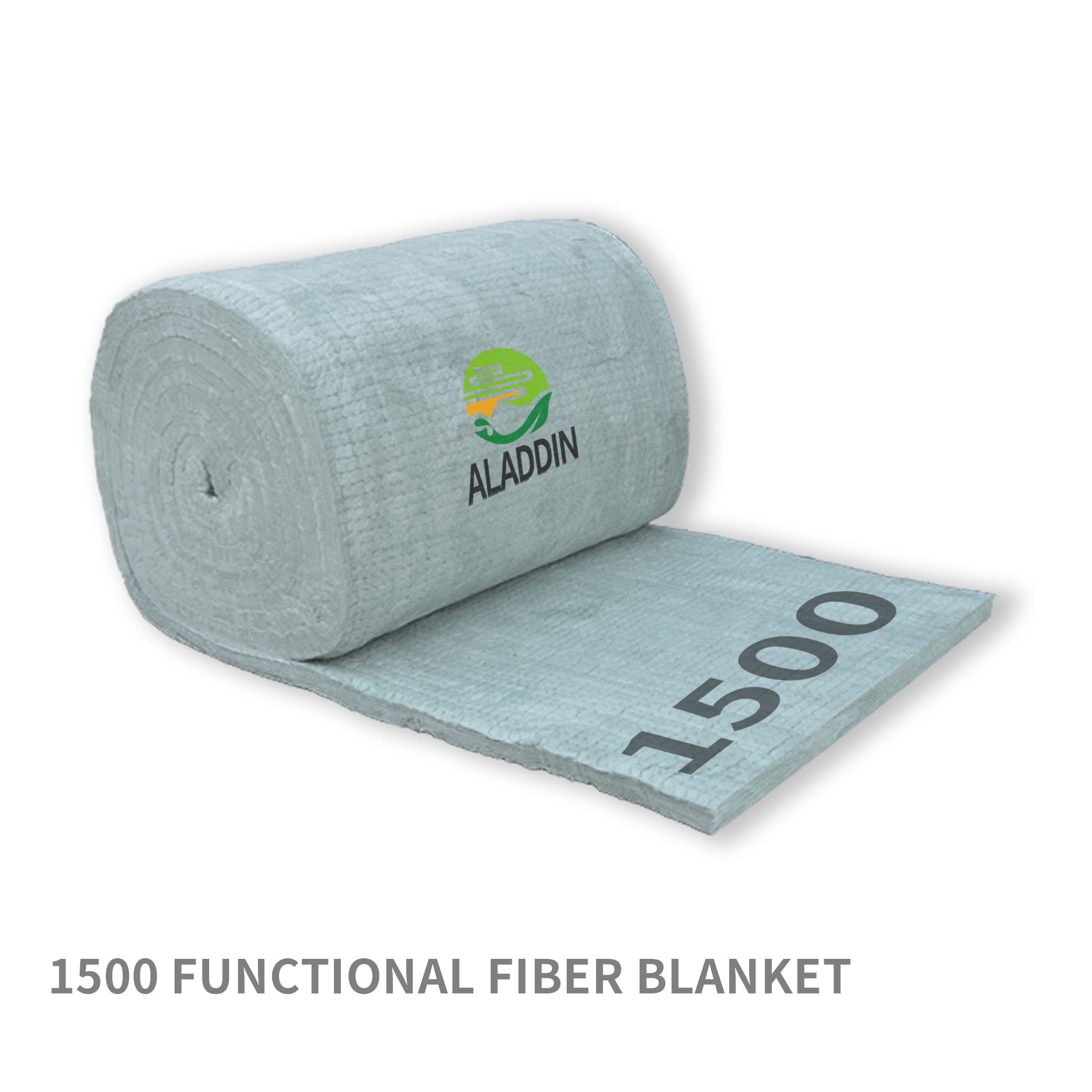
During processing, Aladdin ceramic fiber modules maintain a certain compression ratio to ensure that after the aluminosilicate fiber module lining is completed, the expansion of each module in different directions causes them to be squeezed together into a seamless whole. The ceramic fiber modules can be directly fixed to the anchoring nails of the industrial kiln shell steel plate using various types of anchors.
Application Advantages
Using Aladdin ceramic fiber modules as furnace lining insulation material in ladle baking units offers better energy-saving insulation, is lighter, and more resistant to thermal shock compared to traditional insulation materials. The main benefits are reduced operating costs, improved product quality, and increased production efficiency.
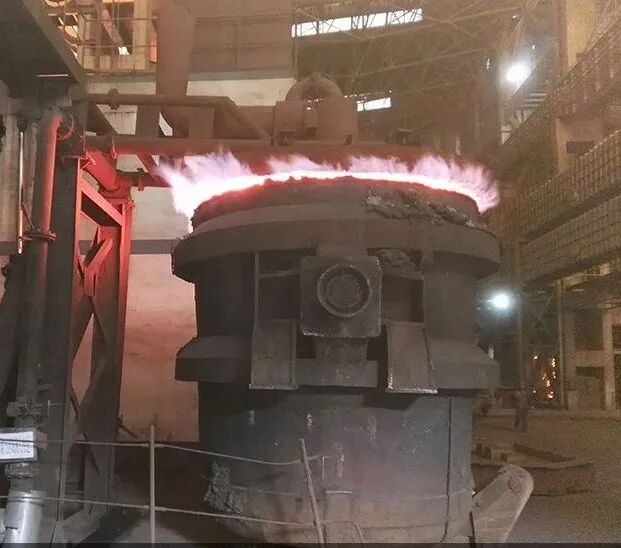
Aladdin Ceramic Fiber Module Characteristics
1. Can be customized in various shapes such as square, rhombus, and fan shape, and can be arranged in multiple ways according to user needs.
2. No expansion joints are required. After unbundling, the ceramic fiber modules will squeeze together in different directions to form an airtight whole.
3. It can resist external mechanical forces, enabling the kiln equipment to be moved for heating or transported to other locations.
4. The elasticity of the fiber blanket can compensate for furnace shell deformation, preventing gaps between the assembled blocks and the furnace plate.
5. It can resist thermal shock.
6. The lining requires no drying or curing and can be put into use immediately after installation.
7. Anchors are located away from the hot surfaces of the components, improving anchoring safety.
LiveChatX
 Send Email
 WhatsApp