When selecting thermal insulation materials for industrial kilns, you first need to clarify the basic operating conditions of the equipment, including long-term operating temperature, working regime, applicable industries, service atmosphere and processing media. Today, Aladdin will analyze suitable ceramic fiber products for thermal insulation of expanded perlite vitrification furnaces based on their operating characteristics.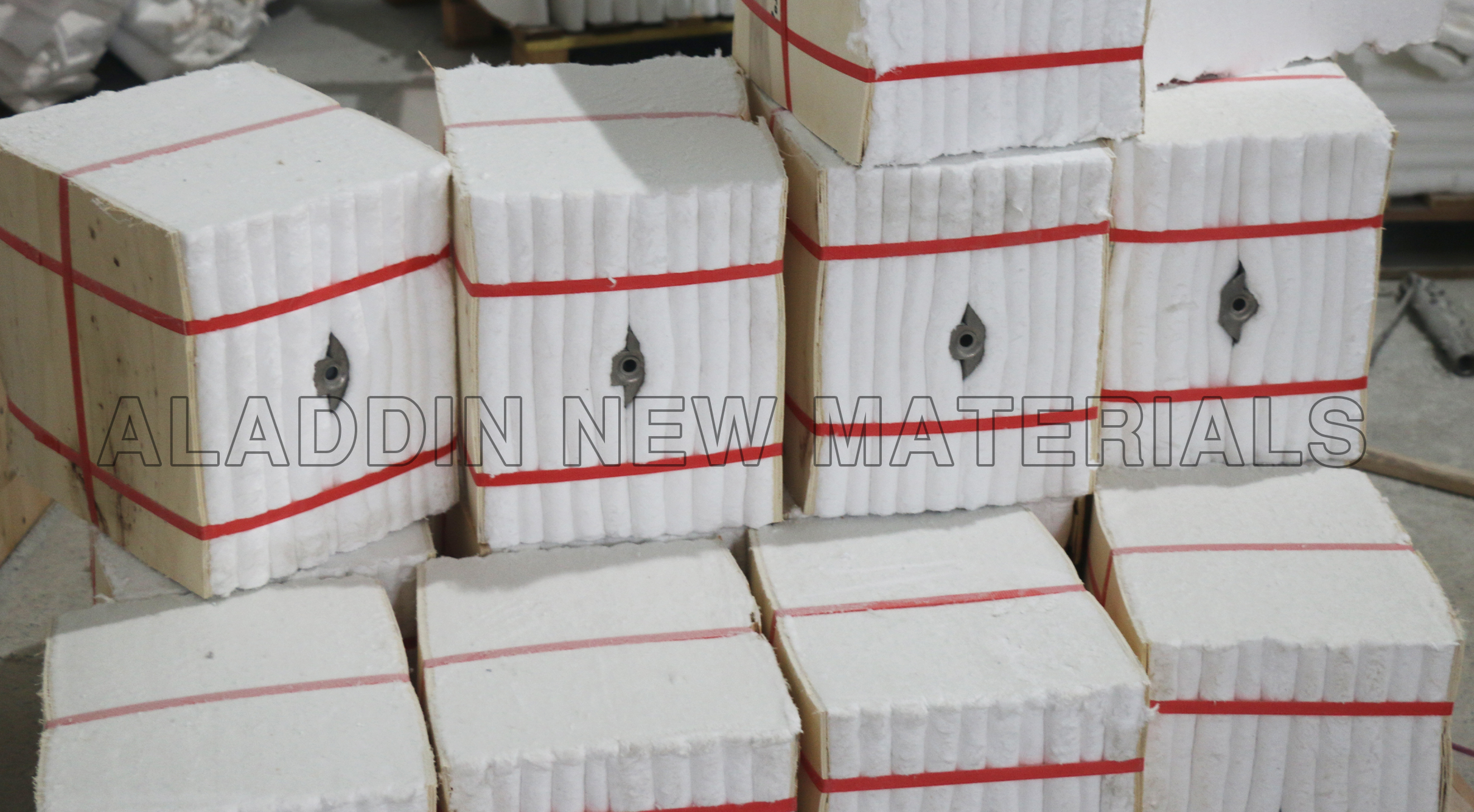
After reaching the top of the kiln, the expanded perlite particles are diverted by the induced draft fan into water-cooled horizontal separators and cyclone separators for shaping and separation. Finished products are then delivered to the finished product silo by the blower and sent for packaging.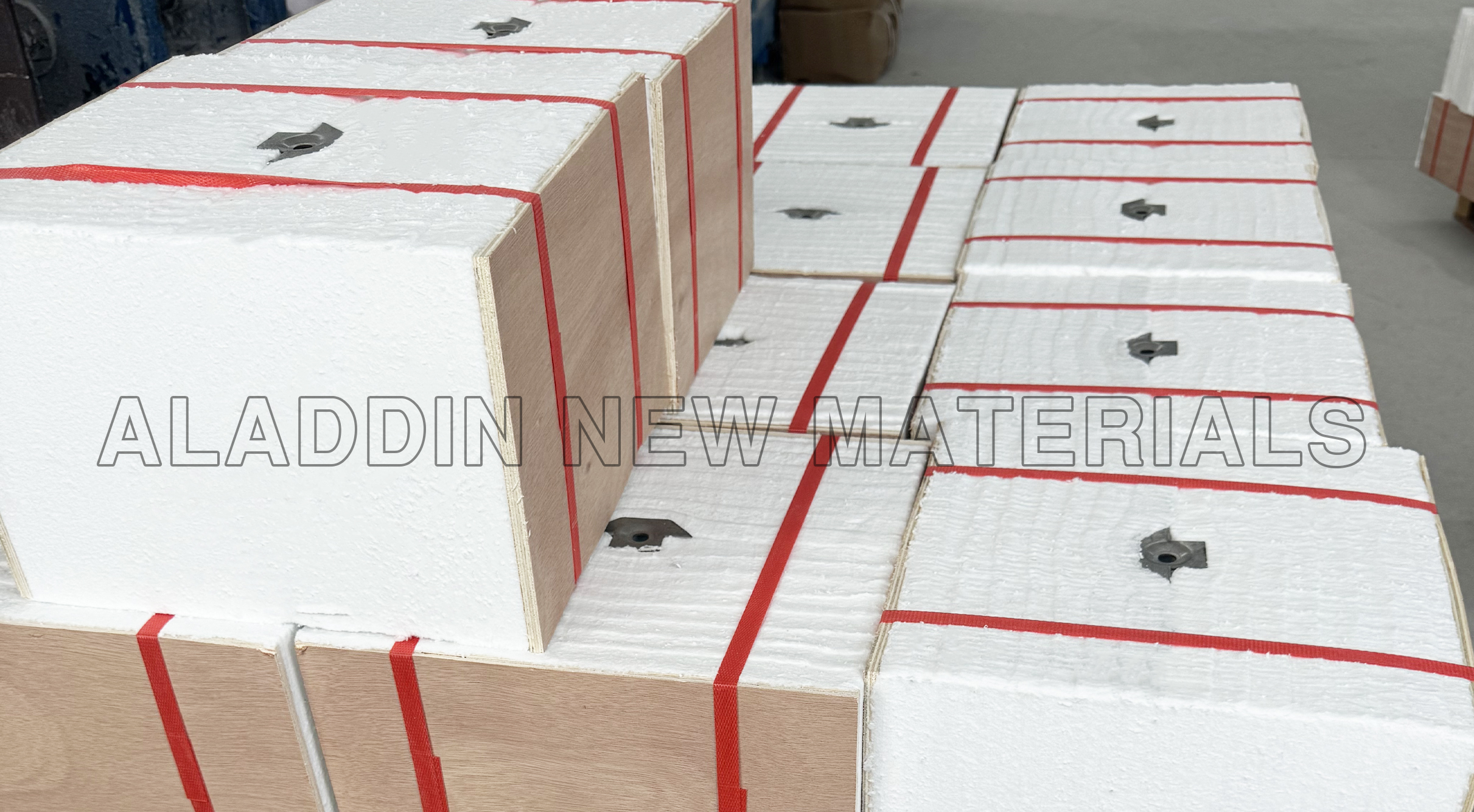
C. Maximum wind speed: 25 m/s
Standard 1260-grade material is adopted for ceramic fiber modules and folded blocks, while high-purity 1260-grade material is used for burner areas.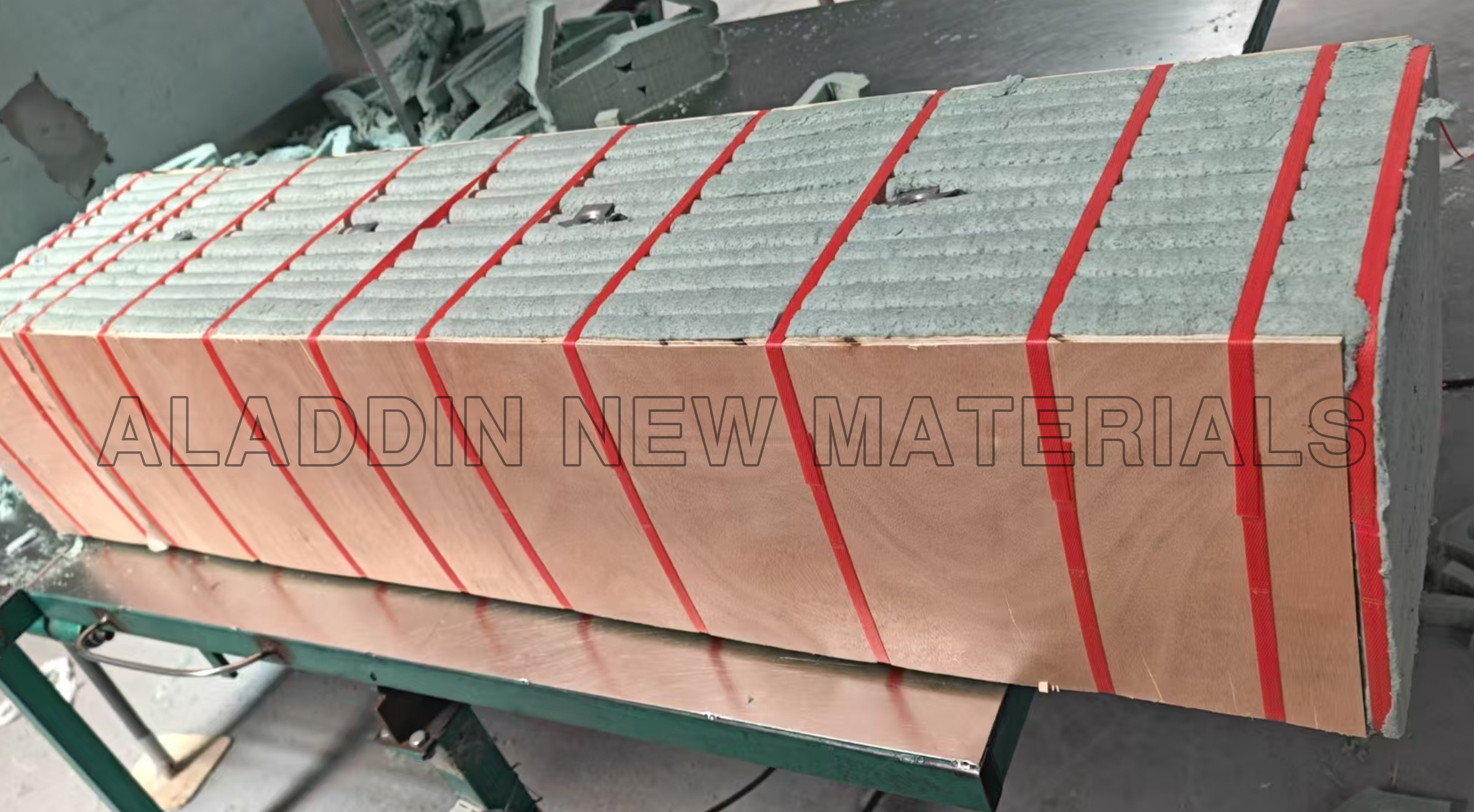
After the binding is removed, folded blankets compact mutually in all directions without gaps.
The flexible fiber blankets offer good resistance to mechanical force.
The elasticity of fiber blankets compensates for kiln shell deformation and prevents gaps between modules.
Low self-weight leads to minimal heat absorption as thermal insulation materials.
Low thermal conductivity delivers excellent energy-saving performance.
Outstanding resistance to thermal shock.
No drying or curing is required for the lining, so the furnace can be put into operation immediately after installation.
The anchoring system is set away from the hot face of modules, keeping metal anchors working at relatively low temperatures.
LiveChatX
 Send Email
 WhatsApp